Why Custom E-Commerce Website Development Is Important for Business Growth
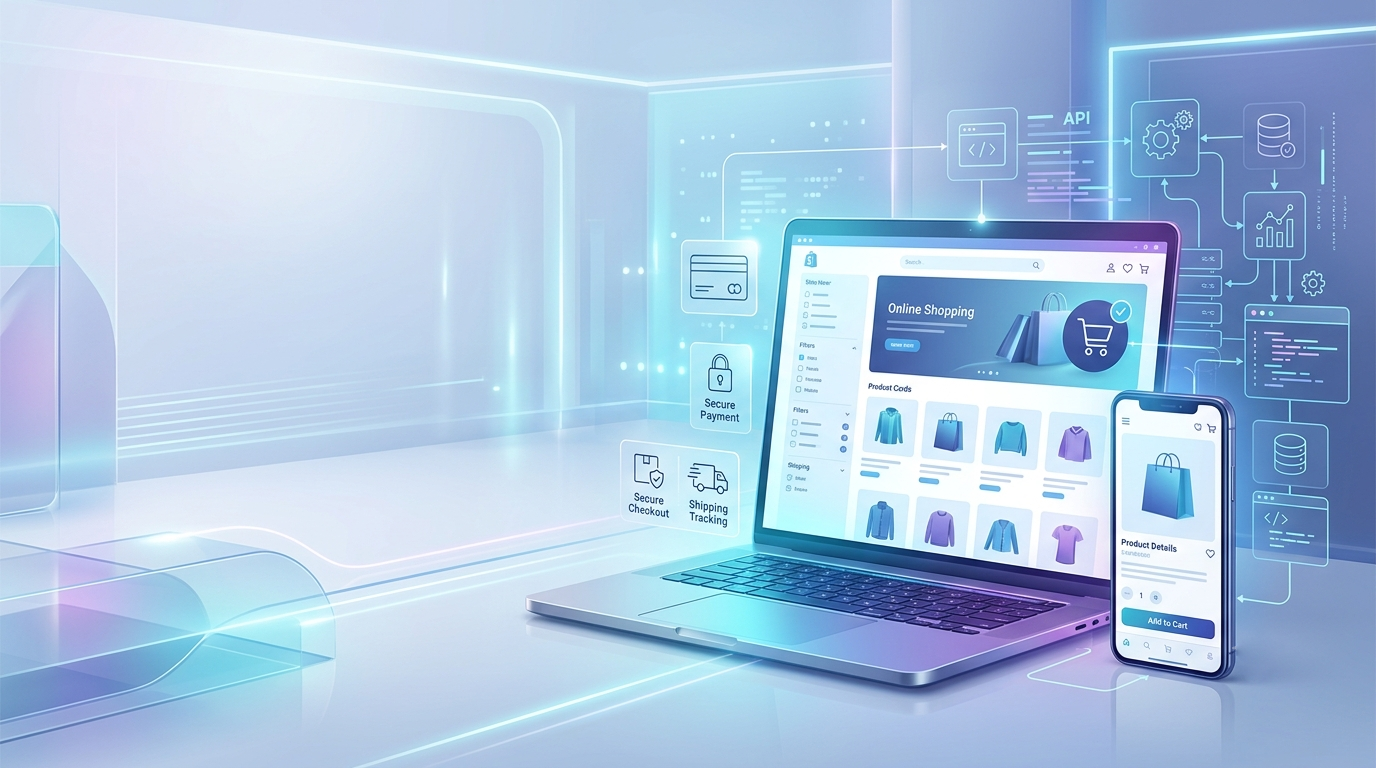
Building an Online Store Around Your Business Requirements
An e-commerce website is more than a digital storefront. It is an important part of how businesses present their products, interact with customers, process orders, and generate revenue. While ready-made platforms can help businesses get started, some organizations need more flexibility to support their unique operations. Custom e-commerce website development helps address these requirements.
A custom e-commerce website is designed and developed around a business’s specific goals, products, workflows, and customer expectations. Instead of depending entirely on standard templates or predefined functionality, businesses can create a platform with features that match their needs.
From personalized shopping experiences to specialized integrations, custom e-commerce development gives businesses greater control over how their online stores look, work, and evolve.
What Is Custom E-Commerce Website Development?
Custom e-commerce website development is the process of designing and building an online store based on specific business requirements. It involves planning the website structure, creating the user interface, developing shopping functionality, integrating payment services, and configuring backend operations.
Unlike a standard template-based store, a custom solution can be developed around the business’s product catalog, pricing model, customer journey, and internal workflows.
It may include custom product filters, unique checkout processes, customer dashboards, inventory connections, and integrations with external business applications.
Benefits of Custom E-Commerce Website Development
1. Personalized User Experience
A good shopping experience makes it easier for customers to explore products and complete purchases. Custom development allows businesses to design website layouts, navigation, product pages, and checkout experiences around their target audience.
A clear structure and intuitive interface can help customers find relevant products and interact with the store more comfortably.
2. Functionality Designed Around Business Needs
Different businesses follow different sales and operational processes. A standard e-commerce platform may not provide every feature required for a particular business model.
Custom development allows businesses to introduce specialized features such as product configurators, custom pricing rules, subscription workflows, quotation requests, or tailored order processes.
3. Greater Control Over Website Design
A business website should communicate its brand identity consistently. Custom e-commerce development provides more control over the storefront’s visual design, layouts, product presentation, and interactive elements.
This helps businesses create a distinctive shopping experience instead of relying entirely on generic templates.
4. Flexible Third-Party Integrations
E-commerce operations often involve multiple systems, including payment gateways, shipping providers, CRM software, inventory management tools, and accounting applications.
A custom website can be designed to integrate with the services that a business already uses. This helps streamline information exchange and reduce repetitive manual work.
5. Scalability and Future Enhancements
Business requirements can change as product ranges expand, customer numbers increase, or new sales channels are introduced.
Custom e-commerce architecture can be planned with future improvements in mind. Businesses can add new features, connect additional systems, and update workflows as their requirements evolve.
6. Improved Control Over Security
An online store handles important information, including customer details, account credentials, and transaction-related data. Custom development allows security requirements to be considered during architecture and implementation.
Secure authentication, access controls, protected data handling, HTTPS, and trusted payment integrations should be part of the development plan. Security also requires regular testing, updates, and monitoring.
Essential Features of a Custom E-Commerce Website
A custom online store should provide the functionality customers need while making backend management efficient for business teams.
Important features may include:
- Custom Product Catalog: Organize products, categories, variations, images, and pricing.
- Advanced Product Search: Help customers find products using relevant filters and search options.
- Shopping Cart: Allow customers to review and manage selected products.
- Streamlined Checkout: Provide a clear purchasing process with shipping and payment details.
- Payment Gateway Integration: Connect trusted payment services to process transactions.
- Customer Account Dashboard: Enable customers to manage profiles, addresses, and orders.
- Inventory Management: Track product availability and stock levels.
- Order Management: Manage order processing, fulfillment, and status updates.
- Mobile-Friendly Design: Provide a consistent shopping experience across devices.
- Analytics and Reporting: Track sales, customer activity, and website performance.
The final feature set should be based on business requirements rather than adding unnecessary functionality.
Custom E-Commerce Website vs. Ready-Made E-Commerce Platforms
Both custom development and ready-made platforms can support online selling. The right choice depends on the business’s requirements, budget, timeline, and technical resources.
Ready-made platforms can provide a faster starting point with predefined features and extensions. They may be suitable for businesses with standard product management and checkout requirements.
Custom e-commerce development is useful when a business needs specialized functionality, unique workflows, deeper integrations, or greater control over the website experience.
For example, businesses evaluating established platforms can explore Magento Development or WordPress Development. The decision should be based on the complexity of the project and the level of customization required.
Important Steps in Custom E-Commerce Website Development
A structured development process helps ensure that the final website supports business objectives and customer expectations.
1. Requirement Analysis
The first step is understanding the business model, target audience, product range, sales process, and technical requirements. This helps define the website’s scope and essential functionality.
2. UI/UX Design
The design phase focuses on creating an intuitive storefront with clear navigation, organized product pages, and a convenient checkout experience.
3. Technology Selection
Developers select the appropriate technologies, frameworks, database structure, and hosting environment based on project requirements.
4. Frontend and Backend Development
The frontend provides the customer-facing shopping experience, while the backend manages products, customers, orders, payments, and administrative workflows.
5. Third-Party Integrations
Relevant payment gateways, shipping services, CRM systems, and other business tools are integrated according to the project scope.
6. Testing and Quality Assurance
The website is tested for functionality, usability, responsiveness, performance, and security before launch.
7. Launch and Ongoing Maintenance
After deployment, the website requires regular monitoring, updates, backups, and improvements to maintain reliability and support business growth.
How Custom E-Commerce Development Supports Business Growth
A well-planned online store can help businesses improve their digital operations and customer experience.
Custom e-commerce development can support growth by:
- Creating a shopping experience that reflects the brand.
- Simplifying product discovery and purchasing workflows.
- Automating selected business processes.
- Connecting online sales with existing business systems.
- Supporting new products, services, and sales models.
- Providing flexibility for future website improvements.
- Helping teams manage store operations more efficiently.
However, website development alone does not guarantee sales growth. Product quality, pricing, marketing, customer service, and ongoing optimization also play important roles.
Why Choose Arptech for Custom E-Commerce Website Development?
Arptech works with businesses to develop e-commerce websites based on their goals, functionality requirements, and customer expectations. Our approach focuses on building practical digital solutions that support daily operations and future improvements.
Our custom e-commerce development capabilities include:
- Custom Store Development: Build online stores around your business model and requirements.
- Responsive UI/UX Design: Create accessible and user-friendly shopping experiences.
- Shopping Cart and Checkout Development: Implement purchasing workflows suited to your store.
- Payment Gateway Integration: Connect relevant payment providers and transaction services.
- API and System Integration: Connect the store with external business applications.
- Performance Optimization: Improve website responsiveness and overall usability.
- Maintenance and Support: Help keep your website updated and functioning effectively.
Explore our E-Commerce Web Development services to learn more about our approach. You can also contact Arptech to discuss your project.
Frequently Asked Questions
1. What is custom e-commerce website development?
Custom e-commerce website development involves building an online store around specific business requirements. It includes customized design, shopping functionality, payment integrations, and backend workflows.
2. Why should a business choose a custom e-commerce website?
A custom website can provide greater control over design, functionality, integrations, and business workflows. It is useful when standard platform features do not fully meet the business’s requirements.
3. How long does it take to develop a custom e-commerce website?
The development timeline depends on project complexity, design requirements, integrations, and the number of features. A simple store may take less time than a platform with advanced workflows and custom functionality.
4. Can a custom e-commerce website integrate with existing business software?
Yes. Custom e-commerce websites can integrate with supported CRM, ERP, inventory, accounting, payment, and shipping systems through APIs or other integration methods.
5. Is a custom e-commerce website mobile-friendly?
Yes. Custom websites can be designed with responsive layouts so customers can browse products and complete purchases across desktops, tablets, and smartphones.
6. Is custom e-commerce development more expensive than using a ready-made platform?
It can require a higher initial investment because the design and functionality are developed around specific requirements. The overall cost depends on project complexity, integrations, technology choices, and maintenance needs.
7. Can a custom e-commerce website be expanded in the future?
Yes. When the architecture is planned appropriately, developers can add features, integrations, product categories, and new workflows as business requirements change.
Conclusion
Custom e-commerce website development gives businesses the flexibility to build online stores around their products, customers, and operational needs. With tailored functionality, thoughtful design, relevant integrations, and a structured development process, businesses can create shopping experiences that support their long-term objectives.
If your business needs an online store that goes beyond standard templates, Arptech can help plan and develop a custom e-commerce solution aligned with your goals.